Some everyday items may be considered hazardous materials (HAZMAT) when shipped, even if they appear harmless. Because these items can pose risks during transportation, they are subject to strict shipping regulations and may be restricted or prohibited.
This article explains what qualifies as HAZMAT when shipping to the U.S, which items can and cannot be shipped through Chit Chats, and what you need to know before sending them.
Note: Failing to declare hazardous materials (HAZMAT), or declaring them incorrectly, may result in shipping delays, fines, or your shipment being deemed undeliverable by USPS.
Table of Contents
Definitions and Classifications
Limited Quantity
Packaging requirements
Class 8: Nonspillable batteries
Packaging requirements
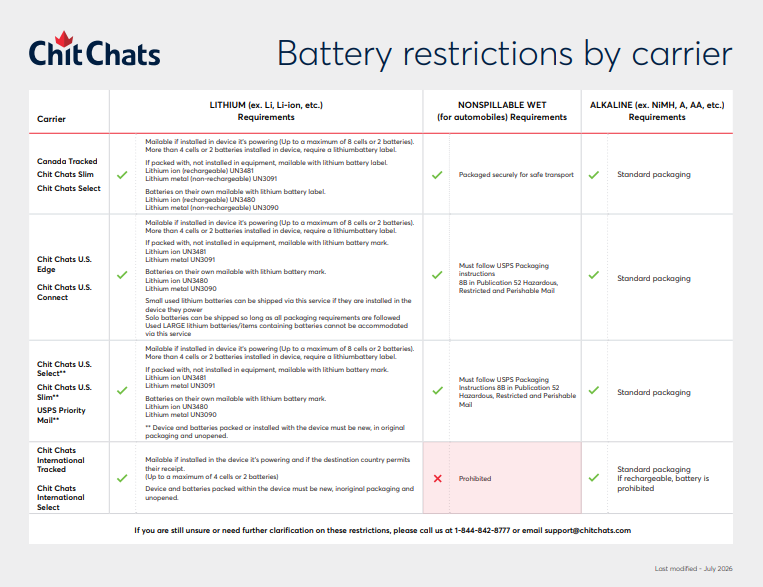
Class 9: Lithium batteries (marked packages)
Packaging requirements
Class 9: Lithium batteries (unmarked packages)
Packaging requirements
Ground-only (miscellaneous)
Packaging requirements
Sending your shipments to the U.S.
Manually Creating Postage
Importing from Connected Stores
Importing via CSV
Labeling Your Packages
Definitions and Classifications
Hazardous materials (HAZMAT) are grouped into different classes based on the type of risk they present. The following classes are the most relevant to Chit Chats shipments:
Limited Quantity: This option is intended for qualifying hazardous products packaged in limited amounts that in accordance with transportation regulations, includes items such as perfumes, paints, nail gels, adhesives, and certain cosmetic aerosols. In addition, this includes liquids that can easily catch fire (for example, perfume and nail polish remover).
Class 8: Wet batteries: Batteries that contain liquid acid or alkali (for example, automotive starter batteries, aviation emergency light batteries, and some industrial equipment batteries).
Class 9: Marked lithium batteries: Lithium batteries that require a lithium battery mark on the package (for example, some laptop and smartphone batteries).
Class 9: Unmarked lithium batteries: Smaller lithium batteries that qualify to be shipped without a lithium battery mark when they meet applicable requirements (for example, some camera and watch batteries).
Ground-only: This option should be selected if your product is not classified as hazardous material but is intended to ship via ground transportation only. This applies to products that do not fit a defined shipping category but are restricted to ground transport.
The sections below provide additional information about each category based on USPS requirements. These rules are established by USPS, and we can only provide guidance based on the information they publish. If you have questions or need further clarification, please contact USPS directly or refer to the USPS resources linked in each section.Limited quantity hazardous materials (miscellaneous)
Some hazardous materials (miscellaneous hazardous materials that do not fall under other classes) may be shipped as Limited Quantity items within the U.S., as long as all USPS requirements are met. This includes but is not limited to cleaning products.
Limited Quantity: This option is intended for qualifying hazardous products packaged in limited amounts that in accordance with transportation regulations, includes items such as perfumes, paints, nail gels, adhesives, and certain cosmetic aerosols. In addition, this includes liquids that can easily catch fire (for example, perfume and nail polish remover).
Packaging requirements
Container (Primary receptacle)
For liquids: each container must not exceed 473 mL (1 pint).
For solids: the total weight of the container and contents must not exceed 0.45 kg (1 lb).
Multiple primary receptacles are allowed in one package.
Note: For alcohol-based perfumes, the 473 mL maximum limit applies to the total liquid volume of the package, not just the primary container. Multiple containers are permitted, as long as their combined liquid volume does not exceed 473 mL per mailpiece.
Cushioning
Use enough absorbent cushioning material to protect the contents and absorb any leakage or breakage.
Outer packaging
Use a strong outer box that securely holds all contents.
Maximum total weight per mailpiece: 11.3 kg (25 lb).
Marking requirements
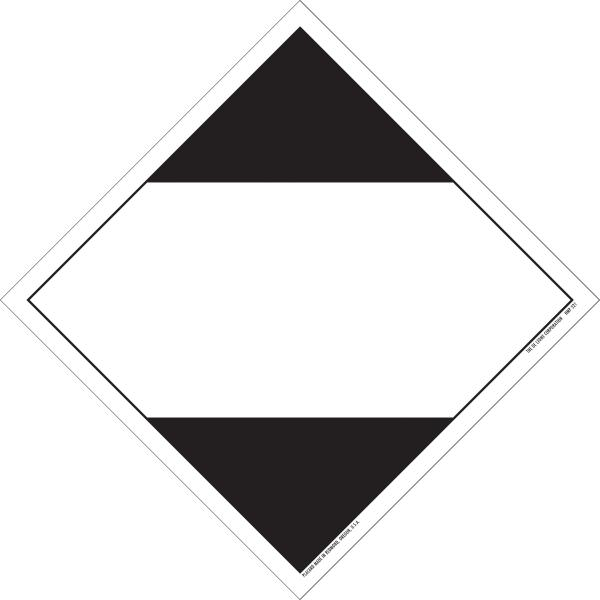
The package must display a DOT Limited Quantity mark on the postage label side of the package.
Class 8: Nonspillable batteries
Nonspillable batteries are wet batteries designed so they do not leak electrolyte (battery fluid), even if the battery is cracked or damaged. They are commonly used in some automotive applications and other industrial equipment.
Packaging
Protect the battery from short circuits (when the battery terminals accidentally come into contact with metal or another conductive material) using protective or cushioning material.
Surround the battery with a non-combustible absorbent material that can absorb any liquid if leakage occurs.
Place the battery in a strong fiberboard box or other sturdy outer package that securely holds the battery and all packaging materials.
Only one nonspillable battery may be shipped per package.
The total weight of the package must not exceed 11.3 kg (25 lb).
Marking
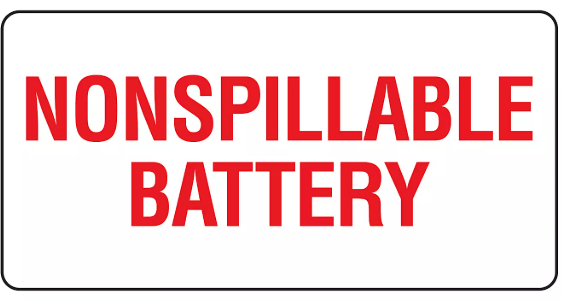
A "NONSPILLABLE BATTERY” label must be on the side where the postage label is on the package.
Class 9: Lithium batteries (marked packages)
Lithium batteries are commonly found in electronic devices such as laptops, smartphones, power tools, cameras, and rechargeable accessories.
Shipping eligibility
Installed in equipment (the battery is inside the device, such as a smartphone or laptop):
Packed with equipment (the battery is in the same package but not installed in the device):
Shipped by themselves (not installed in or packed with equipment).
*Used, damaged, or defective devices/batteries containing lithium batteries cannot be shipped with Chit Chats. Learn more about shipping batteries here.
Packaging requirements
Use a rigid, sealed outer package that protects the contents from damage during transport.
Except for certain button cell batteries installed in equipment, padded envelopes and poly mailers are not permitted.
If shipping batteries by themselves, protect the battery terminals to prevent short circuits (accidental contact between battery terminals that can generate heat).
Marking requirements
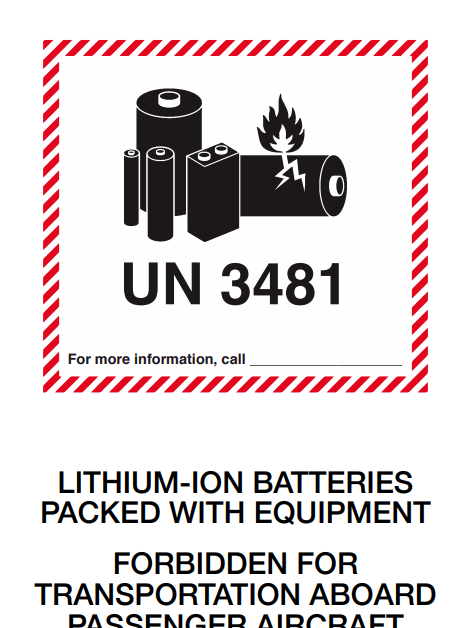
Most shipments containing lithium batteries must display a DOT lithium battery mark label on the postage side of the package.
The mark must include:
The correct UN number for the battery being shipped.
A telephone number where additional shipping information can be obtained.
If you're shipping a used, damaged, or defective electronic device containing a lithium battery, the package cannot be shipped with Chit Chats.
Quantity limits
Lithium metal batteries
Maximum 1 g of lithium per cell.
Maximum 2 g of lithium per battery.
When installed in or packed with equipment:
No more batteries than needed to operate the device.
Maximum 8 cells or 2 batteries per mailpiece.
When shipped by themselves:
Maximum mailpiece weight: 5 lb (2.3 kg).
Lithium-ion batteries
Maximum 20 Wh (watt-hours) per cell.
Maximum 100 Wh per battery.
When installed in or packed with equipment:
Maximum 8 cells or 2 batteries per mailpiece.
When shipped by themselves:
Maximum mailpiece weight: 5 lb (2.3 kg).
Small consumer batteries
Very small lithium batteries (such as some watch, earbud, or small electronic device batteries) have different limits:
Lithium metal batteries: Maximum 0.3 g of lithium per cell or battery.
Lithium-ion batteries: Maximum 2.7 Wh per cell or battery.
There is no limit on the number of qualifying batteries in a package.
Maximum mailpiece weight: 5.5 lb (2.5 kg).
Class 9: Lithium batteries (unmarked packages)
Some small lithium battery shipments qualify to be mailed without a DOT lithium battery mark.
This applies only to shipments containing:
Button cell batteries (small round batteries commonly found in watches, key fobs, hearing aids, and calculators) that are installed in the equipment they power, or
No more than 4 lithium metal cells or 2 lithium metal batteries installed in the equipment they power.
Packaging requirements
Use packaging that is strong enough to protect the contents from being crushed or damaged during shipping.
Padded envelopes and poly mailers are permitted only for button cell batteries that are properly installed in the equipment and adequately protected by the device.
Ground-only (miscellaneous)
This option should be selected if your product is not classified as hazardous material but is intended to ship via ground transportation only. This applies to products that do not fit a defined shipping category but are restricted to ground transport.
Packaging requirements
Container (Primary receptacle)
For liquids: each container must not exceed 473 mL (1 pint).
For solids: the total weight of the container and contents must not exceed 0.45 kg (1 lb).
Multiple primary receptacles are allowed in one package.
Cushioning
Use enough absorbent cushioning material to protect the contents and absorb any leakage or breakage.
Outer packaging
Use a strong outer box that securely holds all contents.
Maximum total weight per mailpiece: 11.3 kg (25 lb).
Marking requirements
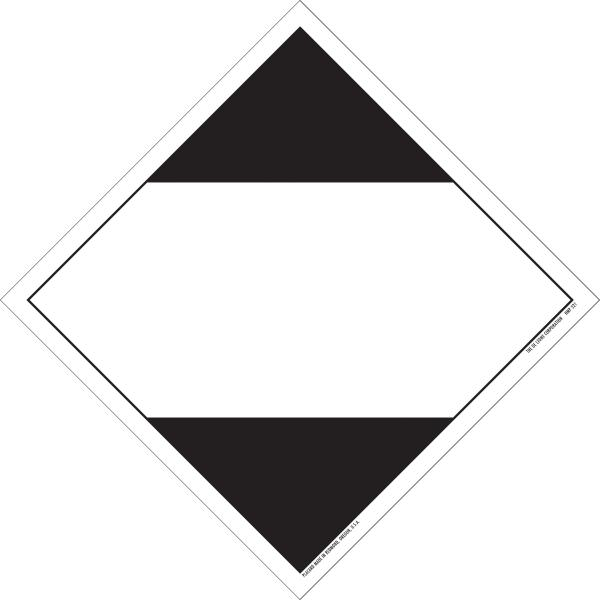
The package must display a DOT Limited Quantity mark on the postage label side of the package.
Sending your shipments to the U.S.
Once you've confirmed that your shipment contains hazardous materials (HAZMAT) and has been packaged according to the applicable requirements, you'll need to declare it correctly in your Chit Chats account. There are several ways to ensure your shipment is properly identified during the shipping process.
*Note: Shipments containing hazardous materials (HAZMAT) are subject to a $7.50 USD surcharge when shipped using USPS Priority Mail.
*HAZMAT is also not eligible for signature confirmation at this time.
NOTE: If improperly declared, improperly labeled, or otherwise fail to meet USPS HAZMAT requirements a $50 USD hazardous materials non-compliance fee will be applied to your account as a postage adjustment.
Manually Creating Postage
When creating a shipment manually, you'll see an optional HAZMAT field.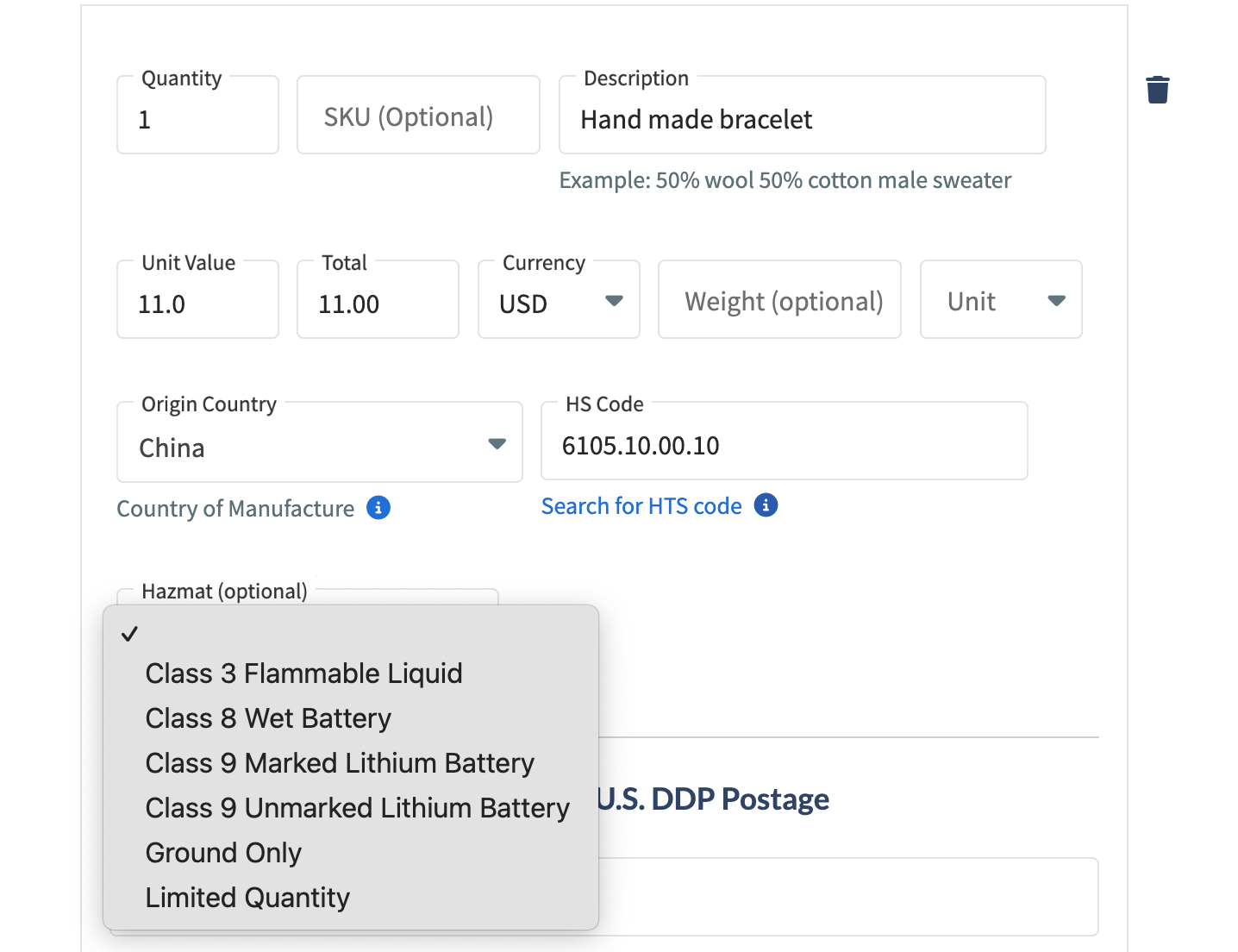
Although this field is marked as optional, you must select the appropriate HAZMAT category if your shipment contains hazardous materials.
Importing from Connected Stores
If you import your shipments from a connected store, this information isn't automatically included during import. We recommend creating a preset and enabling Preset Automation to automatically apply this information to all applicable imported shipments.
Importing via CSV
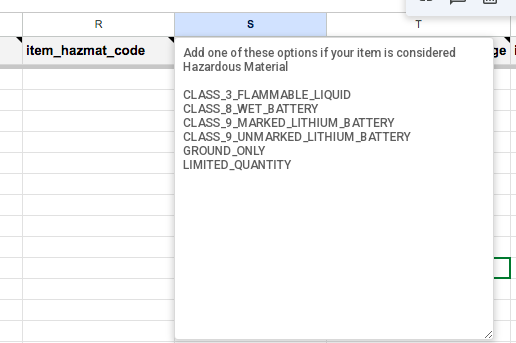
If you have hazardous materials you'll need to update your CSV template to include a new column titled: item_hazmat_code. In this column, enter the appropriate HAZMAT code for each applicable shipment, as shown below. Be sure to enter all codes in CAPITAL LETTERS.
Labeling Your Packages
Depending on the HAZMAT category, different markings would have to be added to the side of your parcel that includes the postage label.